
Why Water Storage Lagoons Are Becoming Essential for UK Businesses
Water has always been an important resource, but today it is becoming one of the most valuable assets a business can have. Across the UK, changing weather patterns, longer periods of dry weather, rising water costs and increasing environmental responsibilities are encouraging organisations to rethink how they source, store and manage water.
For many businesses, investing in a water storage lagoon is no longer simply about storing water for later use. It is about improving resilience, protecting operations, reducing dependence on mains water and preparing for an increasingly unpredictable future.
Whether you’re managing a farm, maintaining sports pitches, operating an industrial facility or overseeing a commercial development, having access to a dependable water supply can make a significant difference to productivity, compliance and long-term costs.
When designed correctly and lined with a high-quality EPDM membrane, a water storage lagoon becomes a long-term investment capable of delivering reliable performance for decades while requiring very little maintenance.
In this guide, we’ll explain why more organisations across the UK are investing in water storage lagoons, who benefits from them, and why choosing the right lining system is one of the most important decisions you’ll make.
Why Are Businesses Investing in Water Storage Lagoons?
The simple answer is that businesses want greater control over one of their most important resources.
Water storage lagoons provide a reliable reserve that can be used when rainfall is limited, demand increases or mains supplies become less dependable. They also help organisations become more resilient by reducing their reliance on external water sources and allowing them to plan for the future with greater confidence.
For some businesses, a lagoon provides the irrigation water needed to protect crops throughout the growing season. For others, it ensures sports pitches remain in excellent condition during prolonged dry weather or provides emergency water storage that supports environmental compliance and fire protection.
Regardless of the industry, the principle remains the same. Investing in water storage today can help reduce future risks while providing a dependable supply of water when it matters most.
Water Security Is Now a Business Priority
Water security has become a growing concern across many sectors, not just agriculture.
The UK has experienced increasingly unpredictable weather in recent years, with periods of intense rainfall often followed by extended dry spells. At the same time, demand on public water supplies continues to increase, placing greater pressure on existing infrastructure.
According to the Met Office, the UK’s climate is becoming increasingly characterised by more frequent weather extremes, including hotter summers and longer dry periods. These changing conditions are encouraging many organisations to invest in long-term water management solutions that improve resilience and reduce reliance on traditional water supplies.
Businesses that rely heavily on water are beginning to recognise that simply depending on mains supplies or seasonal rainfall is no longer the most resilient approach.
Instead, many are investing in long-term water storage solutions that allow them to collect, retain and manage water more effectively throughout the year.
For agricultural businesses, this can mean protecting crops during periods of drought and reducing the risk of lower yields caused by insufficient irrigation.
For sports clubs and golf courses, it means maintaining healthy playing surfaces throughout the summer without relying solely on mains water.
Industrial and commercial facilities are also seeing the benefits. Water storage lagoons can support operational processes, provide emergency water reserves and form part of wider environmental management strategies that help businesses prepare for unexpected events.
While every organisation has different requirements, they all share a common objective – ensuring reliable access to water whenever it is needed.

More Than Just Agriculture
When people hear the term water storage lagoon, they often picture large reservoirs on farms.
While agriculture remains one of the biggest users, today’s lagoons support a far wider range of industries.
Soft fruit growers rely on consistent irrigation to maintain crop quality throughout the growing season. Vineyards use stored water to protect young vines during prolonged dry periods. Nurseries and horticultural businesses depend on reliable irrigation to maintain healthy plants while managing water efficiently.
The National Farmers’ Union (NFU) has also highlighted the growing importance of effective water management for UK agriculture, particularly as weather patterns become less predictable and demand for reliable irrigation continues to increase.
Sports and leisure facilities are increasingly investing in water storage as well. Football clubs, golf courses and sports complexes all require healthy, well-maintained playing surfaces. During warmer months, irrigation becomes essential not only for appearance but also for player safety and the long-term health of the turf.
Commercial developments are also recognising the value of water storage. Some sites use lagoons to support landscaping, while others incorporate them into wider sustainable drainage strategies or environmental management plans.
Industrial facilities often require specialist water storage for process water, environmental protection or emergency use, particularly where regulations require contingency planning for fire water containment or pollution prevention.
The versatility of modern water storage lagoons means they can be designed to meet the specific needs of almost any site, making them an increasingly valuable investment across multiple sectors.
Why EPDM Continues to Be the Preferred Choice
The performance of any water storage lagoon depends on far more than its size or location. The liner is the component that protects the stored water, safeguards the surrounding environment and ultimately determines the long-term reliability of the lagoon.
For this reason, many organisations choose EPDM because it has consistently demonstrated exceptional durability across demanding commercial and agricultural applications.
Unlike many plastic-based membranes, EPDM remains flexible throughout its service life. This flexibility allows the membrane to accommodate natural ground movement and settlement without becoming brittle or prone to cracking.
Its longevity is demonstrated by Firestone’s first major lining project: the Mamusa reservoir, a 12,000 m² irrigation reservoir installed in Murcia, southern Spain, in 1973. More than five decades later, the original EPDM liner remains in service – a compelling real-world example of the material’s lasting performance.
Exposure to sunlight is another important consideration. Water storage lagoons spend decades outdoors, often in completely exposed locations. EPDM is highly resistant to ultraviolet light, helping it maintain its performance year after year without suffering the degradation that can affect some alternative materials.
Perhaps one of its greatest advantages is that it is fully repairable. Although accidental damage is uncommon, maintenance activities, wildlife or unforeseen incidents can occasionally result in punctures or tears. EPDM repairs can usually be carried out quickly using approved repair methods, allowing the integrity of the lagoon to be restored without replacing the entire lining system.
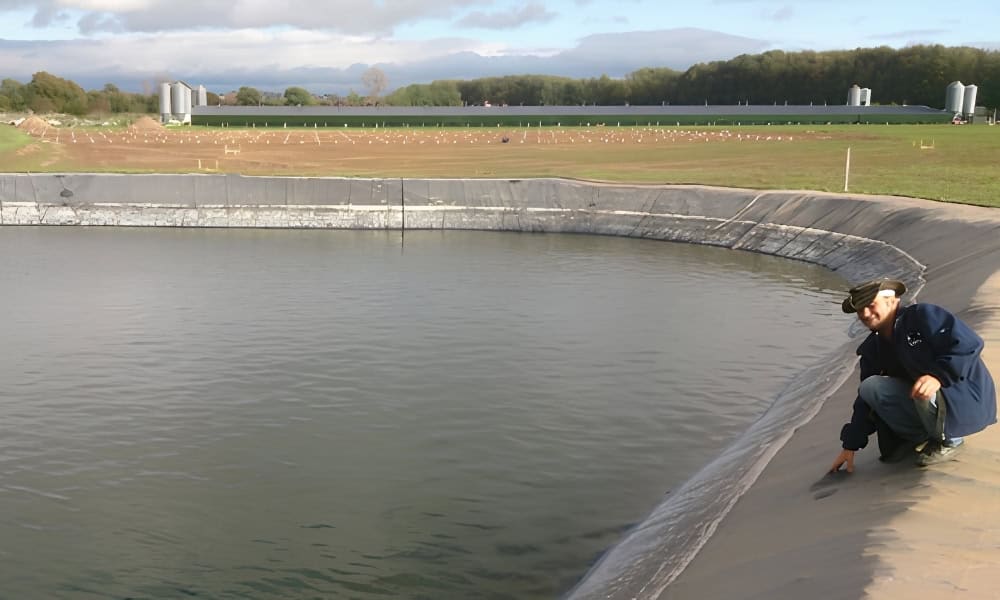
Because EPDM membranes are repairable rather than requiring complete replacement after localised damage, they can also help reduce material waste over the lifetime of the lagoon. This aligns with the growing emphasis many organisations are placing on sustainable asset management and whole-life value rather than simply initial installation costs.
When viewed over the lifetime of the lagoon, this combination of durability, flexibility, UV resistance and repairability often makes EPDM one of the most cost-effective solutions available.
For organisations investing in long-term water infrastructure, selecting the right membrane is every bit as important as choosing the right location or storage capacity.
EPDM Lifespan and Whole-Life Value
EPDM offers an exceptionally long working life. Testing indicates a projected service life approaching 60 years – more than double the 28-year figure reported for a tested exposed HDPE geomembrane. Real-world performance supports these projections: the Mamusa reservoir liner installed in 1973 is now 53 years old and remains in service.
The evidence includes a predicted EPDM half-life of 56 years under demanding conditions, with separate research concluding that the material should last more than 50 years in Western European climates. Further details can be found in the technical bulletin on the life expectancy of Firestone EPDM membranes. By comparison, published research into exposed geomembranes reported a demonstrated lifetime exceeding 28 years for a particular HDPE product, although performance varies according to formulation and operating conditions. Read more in How Long Will My Liner Last?
When considered across the full life of a lagoon, this combination of durability, flexibility, UV resistance and repairability can make EPDM one of the most cost-effective solutions available. For organisations investing in long-term water infrastructure, selecting the right membrane is every bit as important as choosing the right location or storage capacity.
The Whole-Life Cost of Investment
Although HDPE may appear more economical at the point of installation, the whole-life cost presents a very different picture.
An EPDM liner costs approximately £18 per m² and has a projected lifespan of up to 60 years. When estimated groundwork costs of £10 per m² are included, the initial investment is around £28 per m².
By comparison, an HDPE liner costs approximately £13 per m². With the same groundwork costs, the initial investment is around £23 per m², producing an upfront saving of approximately £5 per m².
However, HDPE has an estimated service life of around 28 years. This means the liner may need replacing at least once during the projected 60-year lifespan of an EPDM installation. Even without allowing for inflation, the replacement membrane adds a further £13 per m², increasing the total HDPE investment to at least £36 per m².
This makes EPDM approximately £8 per m² less expensive over the life of the project. The true saving could be considerably greater because the calculation does not include the cost of draining the lagoon, re-excavating the site, completing additional engineering works or managing the disruption associated with replacement.
For long-term water infrastructure, the lowest initial price does not necessarily represent the best value. Investing an additional £5 per m² at the outset could avoid a complete liner replacement and deliver substantial financial and operational savings over the lifetime of the lagoon.
Real Project: Helping Wyevale Strengthen Its Water Supply
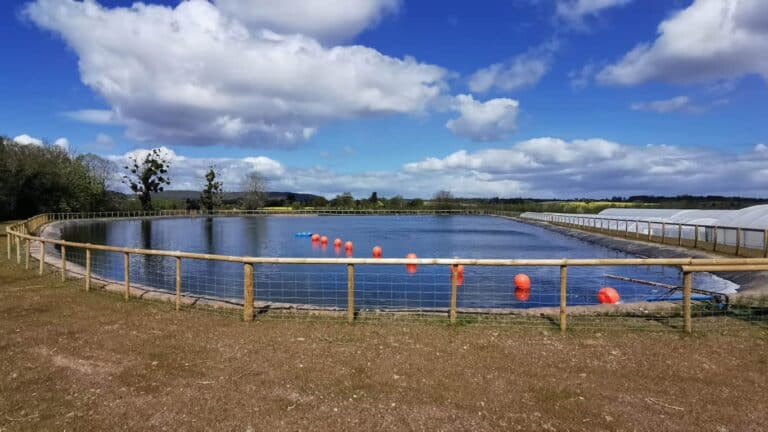
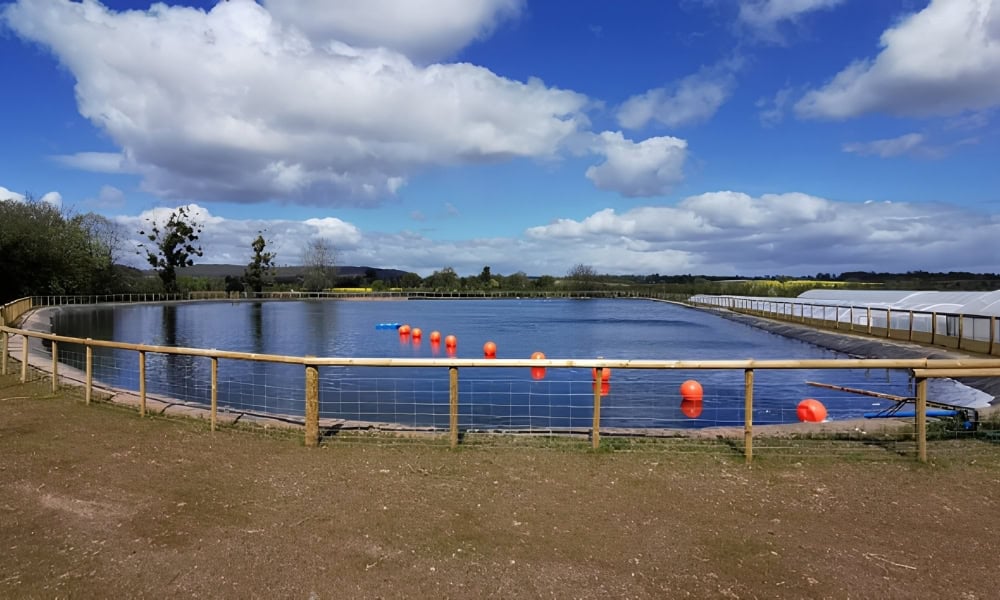
A good example of how water storage can support long-term resilience is our irrigation lagoon project completed for Wyevale.
Like many horticultural businesses, maintaining a reliable water supply was fundamental to supporting ongoing operations. Seasonal rainfall alone could not always be relied upon, making dedicated water storage an increasingly important part of future planning.
The project involved installing a large EPDM-lined irrigation lagoon designed to provide dependable water storage while making the most efficient use of available materials. Every stage of the installation was carefully planned, from membrane layout to on-site welding, ensuring both quality and minimal waste.
The completed lagoon now provides a secure, long-term source of stored water that can be drawn upon whenever irrigation demand increases. This helps reduce reliance on external supplies while supporting day-to-day operations.
The lagoon is such an important part of Wyevale’s water infrastructure that Turtle Productions is engaged annually to inspect the liner and carry out repairs if required. To date, every inspection has given the lagoon a clean bill of health, demonstrating the ongoing reliability of the EPDM lining system.
Projects such as this demonstrate that investing in a professionally designed water storage lagoon is not simply about responding to today’s conditions. It is about building resilience for the years ahead, giving businesses greater confidence that they will have access to the water they need, when they need it.
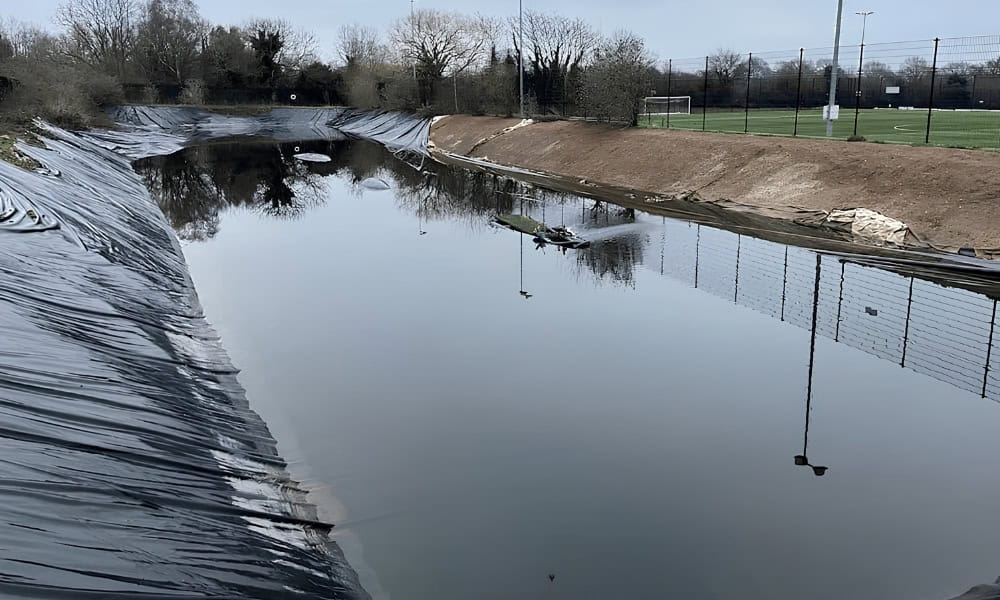
Real Project: Supporting High-Quality Sports Surfaces
Water storage lagoons are not only transforming agriculture. They are also helping sports and leisure facilities maintain high-quality playing surfaces while reducing their reliance on mains water.
One project that demonstrates this perfectly was the installation of an irrigation lagoon for a football facility.
Maintaining a healthy natural grass pitch requires consistent irrigation, particularly during prolonged periods of warm, dry weather. Without an adequate water supply, playing surfaces can quickly deteriorate, affecting not only their appearance but also player safety and the quality of the game.
For this project, the objective was to create a dependable source of stored water that could be used whenever irrigation was required, allowing the grounds team to maintain excellent pitch conditions throughout the season.
As with every lagoon installation, careful planning played an important role. The membrane layout was designed to minimise waste while ensuring the finished lagoon provided long-term durability and dependable performance.
This project highlights an important point that is often overlooked. Water storage lagoons are not simply agricultural assets. They provide practical, long-term solutions wherever reliable water storage is needed, whether that’s supporting crop production, maintaining sports facilities or supplying commercial irrigation systems.
Planning a Water Storage Lagoon
Every site is different, which means every water storage lagoon should be designed around the specific requirements of the project.
One of the first considerations is capacity. The amount of water required will depend on how the lagoon is intended to be used, whether that is irrigation, environmental management, process water or emergency storage. Planning for future demand is equally important, as expanding a lagoon later can often be more complicated and costly than designing sufficient capacity from the outset.
Location is another key factor. Ground conditions, access for construction equipment, surrounding infrastructure and future maintenance all need careful consideration during the planning stage. A well-positioned lagoon not only improves efficiency during construction but also makes ongoing inspection and maintenance significantly easier.
Environmental considerations should also form part of the design process. Every project has its own planning requirements, and depending on the site, factors such as drainage, local watercourses and environmental regulations may all influence the final design.
Depending on how a lagoon will be used, businesses may also need to consider water abstraction requirements. The Environment Agency provides guidance on when an abstraction licence may be required and what factors should be considered before taking water from rivers, streams, lakes or groundwater sources. Checking these requirements early in the planning process can help avoid unnecessary delays later in the project.
Selecting the correct lining system is equally important. While the earthworks create the lagoon itself, the liner is responsible for retaining the water and protecting the surrounding environment. Choosing a proven material with a long service life can significantly reduce maintenance requirements while improving the overall value of the investment.
Planning these elements correctly from the beginning helps create a lagoon that continues performing reliably for many decades.
Why Choosing the Right Installer Matters
A water storage lagoon represents a significant long-term investment, so selecting an experienced installation specialist is just as important as choosing the right membrane.
Large EPDM liners require careful planning long before installation begins. Accurate calculations, efficient membrane layouts and high-quality welding techniques all contribute to the long-term integrity of the finished lagoon.
Attention to detail also helps reduce unnecessary material waste, ensuring projects remain both environmentally responsible and cost-effective.
Equally important is understanding how different sites present different challenges. Agricultural irrigation lagoons, industrial containment lagoons, fire water storage systems and commercial reservoirs all have different operational requirements. Working with a contractor who has experience across multiple sectors helps ensure the finished lagoon is designed around its intended purpose rather than applying a one-size-fits-all approach.
Ongoing support should also be considered. Even though EPDM membranes are exceptionally durable, periodic inspections can help identify accidental damage before it develops into a more significant issue. Because EPDM can be repaired using approved repair methods, many lagoons can continue operating successfully for decades without requiring complete replacement.
When evaluating long-term value rather than simply the initial installation cost, experience, workmanship and ongoing support often prove to be just as important as the materials themselves.

Looking Beyond Today
For many organisations, investing in a water storage lagoon is no longer simply about solving an immediate problem.
It is about preparing for the future.
Water demand is unlikely to decrease in the coming years. At the same time, businesses are under increasing pressure to improve sustainability, strengthen environmental management and become more resilient to changing weather patterns.
A well-designed water storage lagoon helps address all of these challenges by providing greater control over one of a business’s most valuable resources.
Whether supporting irrigation during dry periods, protecting valuable crops, maintaining sports facilities, providing emergency water storage or strengthening environmental resilience, the benefits extend far beyond simply having somewhere to store water.
Combined with a professionally installed EPDM lining system, a water storage lagoon becomes an investment designed to deliver reliable performance for many decades while requiring relatively little maintenance.
Is a Water Storage Lagoon Right for Your Business?
Every project is different, and there is no single solution that suits every site.
The most successful lagoons begin with careful planning, an understanding of how the stored water will be used and selecting a lining system capable of delivering dependable long-term performance.
Whether you’re planning a new irrigation lagoon, considering additional water storage for a commercial development or exploring options for emergency water storage, obtaining specialist advice early in the process can help avoid costly mistakes and ensure the finished lagoon meets both current and future requirements.
With decades of experience installing and repairing EPDM lagoon liners on projects throughout the UK, we work alongside contractors, consultants, developers and end users to deliver water storage solutions designed around each project’s individual requirements.
If you’re considering a water storage lagoon and would like advice on the most appropriate lining system, we’d be happy to discuss your project and provide practical guidance based on your specific requirements.
Frequently Asked Questions
1. What is a water storage lagoon?
A water storage lagoon is an engineered reservoir designed to collect and store water for future use. Depending on the application, lagoons may be used for irrigation, industrial processes, environmental management or emergency water storage.
2. How long does an EPDM lagoon liner last?
A professionally installed EPDM membrane can provide decades of reliable performance. Its resistance to UV exposure, flexibility and repairability make it one of the most durable lining materials available for long-term water storage applications.
3. Who uses water storage lagoons?
Water storage lagoons are used by a wide range of organisations, including farms, fruit growers, vineyards, sports clubs, golf courses, industrial facilities, commercial developments, local authorities and environmental projects.
4. Can an existing lagoon be relined?
Yes. In many cases, existing lagoons can be inspected, repaired or completely relined with a new EPDM membrane, extending their service life while avoiding the cost of complete reconstruction.
5. Do water storage lagoons require maintenance?
Although EPDM liners are designed to provide long-term durability, regular inspections are recommended to identify accidental damage or general wear before it develops into a more significant issue. Planned maintenance helps maximise the lifespan of the lagoon and ensures it remains ready for use whenever required.
6. Why is EPDM widely used for water storage lagoons?
EPDM combines flexibility, UV resistance, durability and repairability, making it particularly well suited to long-term water storage applications where reliability and low maintenance are important.
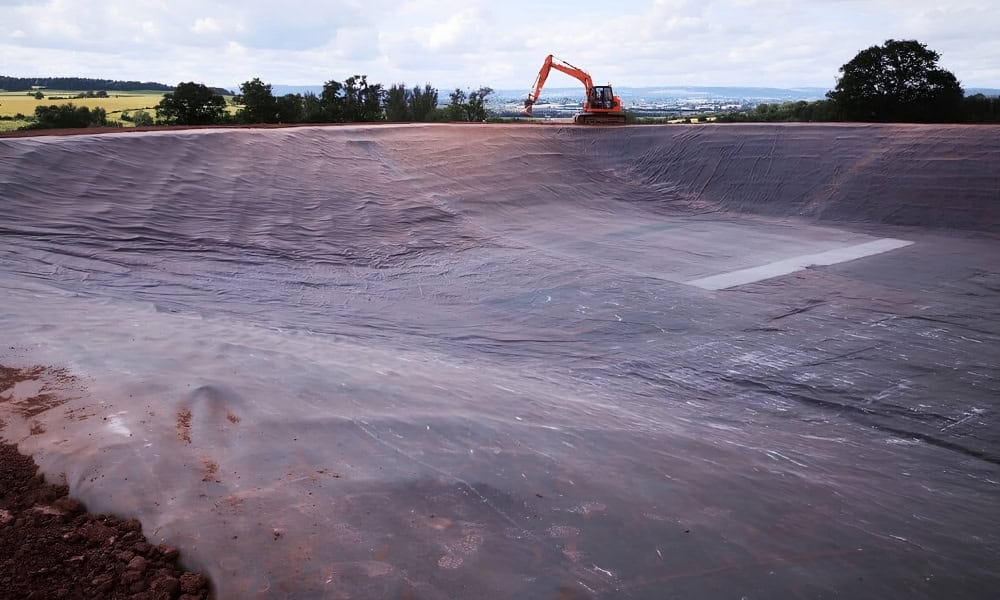
Speak to Turtle Productions About Your Water Storage Project
Whether you’re planning an irrigation lagoon for agricultural use, a commercial water storage reservoir or an Emergency Water Storage (EWS) lagoon, choosing the right liner and installation partner is essential for long-term performance.
We have been installing and repairing premium EPDM lagoon liners across the UK since 2010. We’ve worked on projects for farms, sports facilities, industrial sites, Energy from Waste plants and commercial developments, helping clients create dependable water storage solutions that are built to last.
If you’re considering a new lagoon, extending an existing one or replacing an ageing liner, we’d be happy to discuss your project and provide practical, honest advice based on decades of hands-on experience.
Call us on 01453 297050 or contact us online to arrange a no-obligation discussion about your project.